2021
Annual Impact Report
Download Report96,895,325
Total learners reached in 2021
23,671,825
Total low-income learners reached in 2021











Why We Do This Work
We want to help people reach their full human potential and to thrive as workers, citizens, and family members.
We want to provide new opportunities to the poor, to members of an increasingly vulnerable middle class, to the illiterate, to the imprisoned, to those who struggle with a cognitive difference like autism or ADHD, and to those who face discrimination and persecution.
Second, we want to transform learning for everyone, both rich and poor.
We believe that educational institutions, processes, and tools around the world are broken. Billions of people suffer and fail to achieve their potential because they are taught in the wrong way; our learning tools and institutions are hierarchical, rigid, and unidirectional. Abundant research demonstrates that what works is the opposite approach: people learn best through personalized, collaborative, self-paced exploration linked to their own interests and passions.
Third, we want to make our own firm, our portfolio companies, and the society they serve more humane, more just, more equitable, and more inclusive.
We practice empathy and believe that empathy is a crucial business skill for us and for the entrepreneurs we back. We believe that a strong social mission is a powerful business advantage that attracts talent and helps reduce risk.



July 2022 marks the tenth anniversary of Rethink Education. It seems like a good moment to look back over this decade for patterns and lessons.Our values have been extremely stable over
this period. Everything starts with the question of whom we want to help: people who have been marginalized, oppressed, underserved, and ignored. This includes those of lower socio-economic status, those who have cognitively
or physically different learning capabilities,
the incarcerated, refugees and immigrants,
and those who experience persecution for other reasons, including race, gender, and sexuality. Our goal has always been to unlock human potential and give people a chance to succeed and thrive at work, in private life, and in civic engagement.
Our vision of learning, both formal and informal, has also been stable. Abundant evidence shows that people learn best when they are engaged, delighted, listened to, and cared for, and not when they are judged, shamed, and asked to perform tasks that have no larger meaning for them. As our Managing Partner, Matt Greenfield, phrased it in a previous essay, education at every level should combine the joy and playfulness of preschool, the intense collaborative experiments of a hackathon,
and the deep self-guided exploration of a doctoral thesis.
Our theory of change--of how we serve those values and that vision--has also been consistent. From the start, we were interested
in systems change on a large scale, and we have been looking for catalysts that could transform institutions and communities. We have always been interested in tools and platforms that would allow people to learn in a kinder, more interesting, more effective, more inclusive manner. In addition, we have been interested
in the development of human skills and tacit knowledge as well as facts and formulae.
One example of a continuity across the history of our fund is our interest in nudging and feedback loops. Abundant research shows that gentle occasional nudges can have a powerful effect on the progress and success of learners. Our first encounter with nudging was at Engrade, an LMS company that was acquired by McGraw Hill in 2014. An econometrician named Peter Bergman collaborated with Engrade to run a randomized controlled trial of the effectiveness of notifying parents via text message when students did not turn in an assignment on time. The trial demonstrated a meaningful improvement in grades.
We introduced the founders of Engrade to Joanna Smith of AllHere, which focuses on reducing K12 truancy and improving student engagement. The talented CTO of Engrade joined AllHere and built their platform, and
Peter Bergman became an advisor to the company. But where Engrade developed a simple automated nudge, AllHere has deployed real conversational artificial intelligence. In effect, AllHere is turning schools into centaurs, hybrid creatures that are part human and part robot, with a seamless handoff from chatbot
to human when required.
Our company Mainstay, whose primary focus
is on student engagement and retention for colleges, also uses a research-informed approach to text messages and conversational AI. Mainstay has conducted an impressive total of nine randomized controlled trials. One of those trials, conducted with Common App, included 50,000 parents and 350,000 students, all first-generation college attendees or students from low-income families or historically resilient populations. We expect
this trial to show the same dramatic results every other Mainstay trial has shown.
Other companies in our portfolio using chatbots include Upswing, Anthill, and Campus.org.
The fundamental need is the same across
K12 schools, colleges, and employers: students, parents, and employees feel disconnected, unheard, and lost. Similarly, the organizations
are unaware of what their stakeholders are experiencing. Creating better feedback loops between organizations and their stakeholders
is an urgent need. The feedback loops help learners to build knowledge and habits and make better decisions.
The handoff from Engrade to AllHere is an example of the compounding power of mission-oriented investing. AllHere would have been a phenomenal company without the connection, but the connection gave AllHere a rocket boost. It is worth noting that one key contribution to the success of Engrade was their hiring of
a sales leader who had worked for WIreless Generation, the assessment and curriculum company now known as Amplify Education.
Two of our fund’s founding partners, Rick Segal and Matt Greenfield, were first connected by their mutual investment in Amplify in 2000
and 2006, respectively. The sale of Wireless Generation also gave Rick and Matt the capital used to become anchor investors in Rethink Education Fund I.
Another example of the compounding power
of impact is the formation of the newer Rethink Capital Partners funds: Rethink Impact, which focuses on mission-oriented female and non-binary entrepreneurs; Rethink Food, which focuses on technology for better, more sustainable food; and Rethink Community,
which focuses on catalytic real estate that
can stabilize neighborhoods and strengthen communities.
We have now been around long enough that
we can help answer another frequently-asked question: what happens to the mission of a social venture after it is acquired? We have
now had 24 exits from our portfolio, 22 via acquisition and two via IPO. The bad news is
that our experience shows that big companies often destroy the businesses they acquire.
The good news is that we have seen almost no impact drift: when they prevail, the businesses we back continue to serve the same populations after their acquisitions. We try hard to invest only in companies whose social mission is hard-wired into their business models, and so far
we have largely succeeded.
We at Rethink Education are profoundly grateful to all of the stakeholders who help
us pursue our mission: the entrepreneurs and their teams; the communities of learners and teachers that use the products and services we back; the limited partners who not only
give us capital but also help us think through problems and help keep us honest; and all of the other ecosystem participants who have chosen to help us and our portfolio companies. We look forward to the next decade of our mission, which we enter as a stronger, bolder, and more diverse firm than we have ever been.
Yours sincerely, Matt, Dre, Michael, Ebony, Amanda, & Bridget
The entrepreneurs we are looking for have a double task: to solve an urgent problem for the current system, and to transform the system into one that serves the whole student. We are looking for Trojan horse companies that carry a secret cargo of heightened empathy, collaboration, and joy.


In 2020, the buildup of political and racial unrest boiled over when a police officer, who our country trusted to protect and serve, murdered George Floyd. Within venture capital, we reflected on the inequities in funding: of venture-backed startups in the U.S., 77% of founders are white, whereas only 1.8% are Latinx and 1% are Black.
The root cause of this imbalance is complex and this past year, our team has taken action on three fronts:
Rethink Education has earmarked $5mm from Rethink Education III to invest in seed stage companies launched by underrepresented people of color helping solve some of the toughest challenges from education to workforce development.
The team has coined this initiative RETHINK EQUITY, acknowledging that venture capital is hardly distributed on a level playing field.
While this initiative is new, Rethink Education’s track record of investing in diverse founders dates back to the firm’s inception in 2012. Currently, 12.5% of Rethink Education’s portfolio is founded and/or led by Black and Latinx CEOs.
We need more diversity among VC fund managers. Venture capital is one of the least diverse asset classes as far as investor representation. Just 1% of venture capitalists are Latinx and 3% are Black. In an industry where deals are facilitated by warm introductions, diverse founders are often outside of traditional early-stage capital networks, both angel and institutional.
Our team was thrilled to help Southern New Hampshire University (SNHU), a leader in innovative instruction delivery, assign part of its endowment to investing in diverse fund managers as another frontier in addressing structural inequalities. In October 2020, SNHU’s board of directors led a Socially Responsible Investing Initiative and our team’s Matt Greenfield & Ebony Brown found and vetted the fund managers that presented to the board. SNHU ultimately invested $11mm across five African-American-led VC funds.
The Board of Directors has a powerful impact on how a company serves its end users. Yet, underrepresented ethnic & racial groups make up 40% of the U.S. population but just 12.5% of board directors.
At Rethink Education, we are taking action to ensure that the boards of our portfolio companies reflect the learners served. To that end, Rick Segal, Managing Partner, recently stepped down from his Board Director seat at APDS, to be replaced by Lawrence Bartley. APDS delivers education to incarcerated learners, many of whom are black and brown men, who are disproportionately impacted by the criminal justice system. Bartley is Founder & Director of “News Inside” of the Marshall Project, an award-winning, nonpartisan news organization focused on criminal justice and has direct experience with the prison system, having been incarcerated at 17 years old and then serving 27 years. Rick's decision gives voting power to a leader who not only shares the racial identity of APDS’ learners but also deeply understands the correctional system.
Rethink Education has earmarked $5mm from Rethink Education III to invest in underrepresented people of color helping solve some of the toughest challenges from education to workforce development. The team has coined this initiative Rethink Equity, acknowledging that venture capital is hardly distributed on a level playing field.
While this initiative is new, Rethink Education’s track record of investing in diverse founders dates back to the firm’s inception in 2012. Currently, 14% of Rethink Education’s portfolio is founded and/or led by Black and Latinx entrepreneurs.

Our mission is to expand opportunities for education and career progression to populations that are overlooked and underserved. Increasing access and representation is at the core of this mission. We approach this core aspect of our mission on three different levels: our own team, the teams of the startups we invest in, and the people served by those startups.
These three levels are connected to each other, and we believe it would be hard to pursue our mission without continual effort on all three levels. We don’t believe that one can use investment as a tool to make the world a more just, more equitable, more inclusive place if one starts with anon-diverse investment team or a non-diverse group of entrepreneurs.










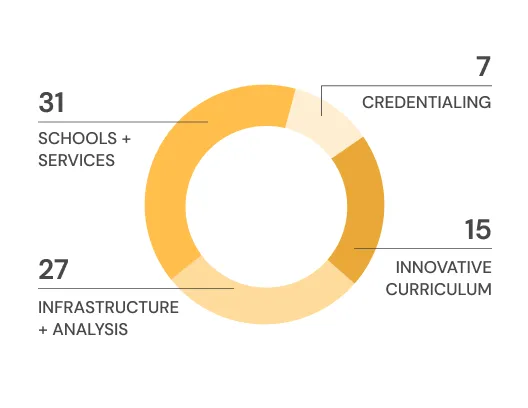
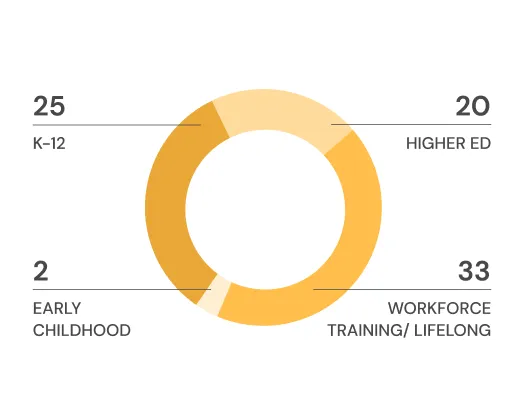
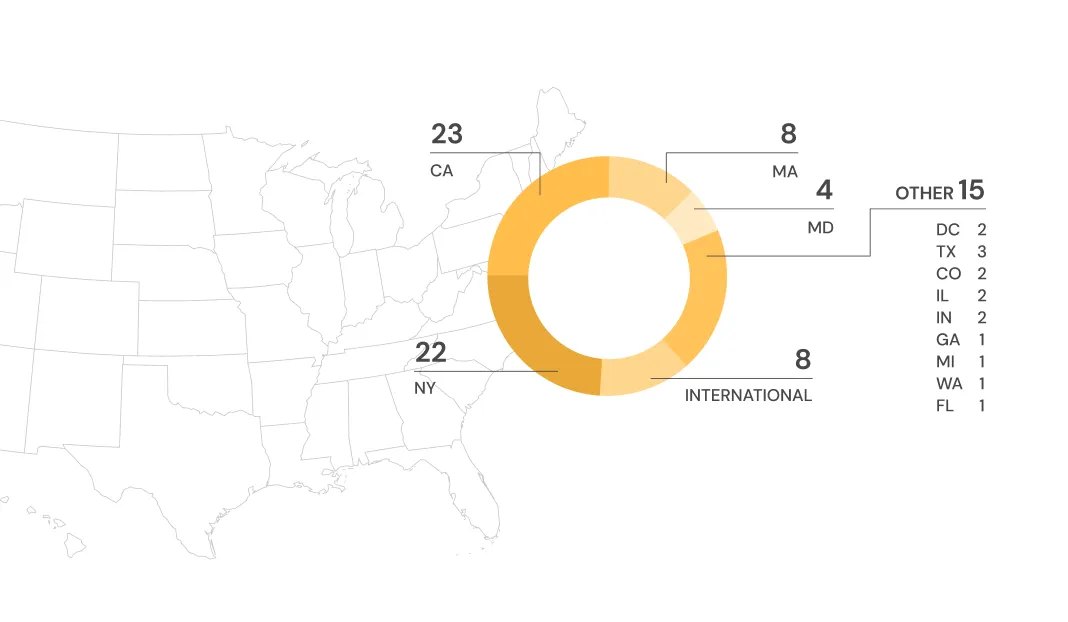
In 2020, our portfolio companies made some major progress addressing urgent problems in education. We are proud to support companies that are:
In 2021, our portfolio companies made some major progress addressing urgent problems in education. We are proud to support companies that are:

Vivvi opened to serve employees of New York Presbyterian within 3 weeks of NYC declaring a state of emergency in March 2020. In 2021, Vivvi continues to serve over 1,000 of those families and has achieved significant impact on both the parents and the children with parents reporting 77% less burnout and 41% increased safety and focus at work. 78% Vivvi students have achieved improved academic performance, 71% more confidence, and 65% strong relationships.

Empowered 5.5 million learners in 2021 to learn new skills & be better prepared for their careers. Crehana’s courses & content, it is able to inspire students with 88% of students reporting that Crehana motivated them to achieve their goals. Teachings expand beyond career-specific skills and into community and human skills with 80% of students reporting increased self confidence after completing Crehana courses.
One notable case study in Civitas’s impact includes its work with Florida Atlantic University where the refined approach to student success allowed the school to more than double the four-year graduation rate to 48% in 2020 from just 19% in 2014, with most significant gains among historically underserved groups. For University of Central Oklahoma, Civitas’ partnership resulted in $1.2mm net tuition revenue saved and hundreds of additional students reaching their goals.
Major League Hacking’s influence is far reaching, with MLH alumni making up 32% of all new programmers coming online each year in the US. MLH provides invaluable help for programmers to become career-ready, with 92% reporting they learn skills at MLH hackathons they cannot learn in a classroom. Additionally, MLH strives to diversify the programming field, with 75% of its US community identifying as BIPOC1 and 36% as women or non-binary. (1 Based on survey results from ~10% of the MLH community)

In 2021, Formative helped improve learning outcomes through formative assessment and feedback collection for 5.9 million students and empowered schools to more easily transition to remote learning during the COVID-19 pandemic due to the tech-driven nature of its assessment and data management capabilities.

In 2021, Pathstream propelled students to new heights in their careers with 96.6% of Pathstream students achieving their career goals within 12 months. Pathstream also helped students expand their income with a median reported salary increase of $15,000 in 2021.








I always have my Formative live results page up so I can see if I need to do any immediate intervention before they continue to the next content level. - Formative teacher


During COVID-19, Formative offered its school and district product to teachers to help them transition and better teach in a new virtual environment by tracking student understanding and providing support based on feedback in real-time during class.

You're super helpful and these messages are a crucial ingredient to my success. How do I keep receiving them or, can we just reset the bot again for 2021. - Student
In 2020, Mainstay (fka AdmitHub) offered a COVID-19 AI chatbot to Higher Ed Institutions so students could get clear and immediate answers from their schools around school-specific pandemic policies and health and safety.
Mainstay also partnered with CommonApp to support first-generation & low-income college students through the especially challenging COVID summer melt season, a high-risk period of time when students who enroll in college end up not attending in the fall because they lack the resources or support network to pay tuition, obtain financial aid or find housing.

I think the biggest change I’ve seen in Hannah is her level of confidence in her least favorite and hardest subject in school. As a working parent, it’s made my life so much easier knowing that she’s in good hands. - Vivvi parent
During COVID-19, Vivvi recognized the critical challenge of childcare for emergency healthcare workers. The team partnered with New York-Presbyterian Hospital to launch an in-person childcare center in addition to virtual tutoring to both support healthcare hero parents and enhance learning and care for their children.

The below highlights the breadth and depth of impact that our early- and growth-stage portfolio companies are having in the education sector.

Working in tandem with governments to dramatically improve the delivery of public education in emerging markets



The educational attainment gap between low and high income countries is no secret. Yet, so much rests on educational attainment in the post-pandemic world, with increasingly dire implications for citizens of countries where educational outcomes are negatively correlated to safety and general well being. It is widely understood that disrupted education adversely affects both learning outcomes and social and behavioral development of children. Furthermore, the U.N. states that “for millions of children around the world, school is not only a place to learn. It is a safe place, removed from violence…” Yet, the U.N. estimates that, in 2018, some 258 million children and youth were out of school, with 5.5 million more girls than boys out of school, and with far more pronounced retention challenges in sub-Saharan Africa and Southern Asia. In Pakistan, for example, primary schools saw just a 73.2% completion rate in 2019, compared to 98.53% in Spain, 98.7% in Peru, or 99.12% in Norway. Completion rates are just one factor in educational attainment, but give a strong indication of the educational landscape in an emerging market. The variable or low infrastructure environments in many emerging markets make the delivery of quality public education a challenging proposition, at best. From political instability to environmental degradation of school lands and unreliable digital infrastructure, the physical and infrastructural barriers to the delivery of high-quality educational experiences in emerging economies are countless, and differ from region to region. For many, stable electricity may be hard to come by. Elsewhere, internet infrastructure might be limited to 2G; barely adequate for even basic connectivity. A good deal of schools struggle to operate in harsh physical environments where dust, dirt, and direct sun exposure are a constant. Modernizing the school environment and streamlining learning experiences is a daunting – if not impossible – challenge, without taking a systematic and networked approach. Yet, that modernization and improvement of the learning environment for public school attendees is a critical factor – if not the most critical factor – in helping to drive learning outcomes and ultimately shrink the educational attainment gap between low and high income countries.
NewGlobe partners with governments in pursuit of more powerful and more sustainable educational delivery for public schools in emerging markets. Harnessing the power of data through their “Big Data Moat”, NewGlobe offers governments an integrated, tech-enabled learning ecosystem that is purpose-built for use in challenging school environments. The NewGlobe education management system makes use of a full-stack tech platform that covers the entire value chain of statewide school delivery. At the core of its model is a tablet-based learning management system for teachers that is optimized for sub-optimal infrastructure, and smartphones for administrators. Also included in the stack are: the capacity for mobile monitoring of learning delivery; gradebook and assessment modules; as well as modules that span the student, teacher and administrator lifecycle. Digital dashboards aid in the delivery of school management and learning outcomes. NewGlobe’s instructional content is customized by lesson, subject and grade level, with continuous content adaptation based on real-time learning analytics within the teacher’s platform. Students are assigned printed learning materials and assessments –including textbooks, homework and classwork books. Lastly, NewGlobe’s forward-deployed implementation teams work within the relevant political context to ensure on-site success in getting customers up and running quickly. A dedicated team of expert, field-based professional development coaches are on-site to routinely visit classrooms and evaluate the efficacy of delivery.
With the understanding that the delivery and management of education systems within emerging economies involves high stakes for all parties, NewGlobe has chosen to build its model on a core of efficacy and research. Their educational delivery system was rigorously studied in a two-year Randomized Control Trial by 2019 Nobel Prize-winning economist, Professor Michael Kremer, who assessed NewGlobe’s effect on learning outcomes to be 0.81 to 1.35 SD. That number stands in contrast to 0.69 SD, which is the historical record for education interventions rigorously evaluated by randomized control trials at a large scale in emerging markets, and to 0.09 SD, which is the mean. Eric Hanushek, a senior fellow at Stanford University, reported that the learning gains driven by the NewGlobe education system led World Bank to focus on NewGlobe for its ability to “lift students in the developing world into the modern age,” with former World Bank Group president Jim Young Kim attesting that, “After about two years, students’ average scores for reading and math have risen high above their public school peers.” Similar validation was echoed by McKinsey & Company, Cairneagle Associates, Brookings Institute, and The New York Times. While the gains and potential for improved outcomes among students and schools are remarkable in their own right, NewGlobe’s interventions in emerging markets also hold the potential to drive change at an even higher level, with the ability to positively increase an entire country’s GDP. The implementation in Nigeria, for example, stands to help the country realize a projected GDP increase of over $2B.
With connectivity among the greatest challenges to delivery of modern education in the emerging market context, a suitably robust approach to hardware is key for NewGlobe. Their tablet- based technology is designed to work for a two week period on a single charge, negating the need for charging points and preventing unnecessary setbacks. Multiple levels of data caching and offline-first capability means their technology doesn’t just work at a mediocre level when network access is limited; it assumes sporadic internet connectivity will be the norm, and adjusts accordingly. Critically, NewGlobe’s interventions and subsequent learning gains were not determined by parents’ income, education levels or spoken language, which can be complicating factors when attempting to measure educational progress in an emerging market.
In Edo State, Nigeria, NewGlobe has worked in tandem with the political objectives of local government with a shared aim of improving the state of public education in the region. Governor Godwin Obaseki, of Edo State, launched the Edo State Basic Education Sector Transformation (Edo-BEST) initiative, hoping to improve the situation for Edo’s public school system in the context of Nigeria’s ongoing struggle with absenteeism and insurgency among children and teenagers. To that end, NewGlobe white-labeled their learning ecosystem across the region, in an implementation that encompassed more than 300,000 students and generated steady state annual revenue of $10M. In less than two years, Edo state reported a 17% increase in public school enrollments, with local media reporting on a spate of parents withdrawing their children from private schools in order to enroll them in the much-improved public school system, which quickly boasted, according to media sources, the “lowest incidence of out-of-school children in Nigeria”. After just 2.5 months of instruction, Edo State students being educated in the NewGlobe system unlocked educational gains equivalent to 70% of what would normally be realized in a full year.
Using technology to expand access to professional development for existing and aspiring care and nursing professionals; ultimately offering higher earning potential to care workers

While worker shortages linked to The Great Resignation have been damaging to all sectors, shortages and skills gaps pose especially grave dangers in fields like nursing and home care. Any shortcoming in the availability or qualifications of trained professionals can mean the difference between comfort and suffering for countless elderly, ill, and highly vulnerable patients. Yet, to date, there have been few accessible resources available for those seeking to become certified or hone their skills in this profession. With the limited resources available, digital interconnectedness has not been part of that landscape. The result has been a highly siloed approach to training and upskilling care professionals, leading to sporadic and inconsistent quality of training (and ultimately of care) from one system to the next. The pandemic exacerbated the skills and worker gap, adding fuel to the proverbial fire of short-staffed care facilities. The shortage has continued to worsen in spite of a vast pool of prospective workers – including immigrants who already have experience working in their home countries as care providers – who have been unable to access good jobs in the care space simply because of difficulty accessing training programs. “Long-term care was in trouble before the pandemic,” Bianca Frogner, researcher and professor at the University of Washington School of Medicine, told U.S. News & World Report, explaining that the demand has for a long time far outpaced the supply of skilled workers. CareAcademy writes of a ‘triple tsunami’ effect, comprising a rapidly aging population, a global pandemic that fueled unprecedented demand for care in the home, and a hiring crisis that is historically unrivaled in its magnitude and impact. Further, AARP data tracking nursing home staff shortages in the wake of the pandemic showed that some 36% of nursing homes remain understaffed, with a wide variance by state: 5.5% in California, to over 80% in Alaska.
CareAcademy is an online caregiver training platform that can be used by agencies to
upskill and certify aspiring and existing care professionals, using a mobile-friendly platform with sound learning design and topically relevant content. Learners can build their skills base quickly and easily, and advance their specialized knowledge with continuing education and growth opportunities. At the same time, they can improve their earning potential by unlocking college credits for training completed in the CareAcademy platform.
CareAcademy is approved in all 50 states and uses a blended training model to train and certify new home health aides (HHAs), while offering continuing education for certified nursing assistants (CNAs). Its ANCC-accredited classes mean CareAcademy meets state requirements for occupational therapists (OTs), physical therapists (PTs), registered nurses (RNs), and beyond. Students are auto-assigned to classes based on their state’s requirements, and agency leaders can view the progress of all student-caregivers in one location. Automatic reminders are sent to caregivers, urging them to complete requisite steps in their training, and agency users have the ability to assign specific classes to caregivers in order to prepare them for specific care scenarios or situations.
The company cites that their programs yield 60% faster onboarding for new hires than traditional programs, four times more class completions than in-person training, and 95% time saved for administrators on training-related tasks.
For dementia patients and their caregivers, the value of staff who are trained, confident, and competent is immeasurable. Nonetheless, measuring the confidence and skill level of prospective dementia caretakers who had taken a CareAcademy course, for Adeosun and her team, felt like an important opportunity. People with dementia commonly display aggressive or challenging behaviors, meaning caretaker composure and skill in a dementia care environment is of the utmost importance. Much of that composure starts with confidence.
CareAcademy, eager to measure the impact
of training on the confidence of entry-level caregivers or those with limited or no professional experience, commissioned a study of prospective caregivers. They invited
a pool of people to participate who had been displaced by the pandemic and were looking
to build a career caring for vulnerable members of society. The study included a demographic survey, a pre-test assessment
to establish knowledge baselines, three hours of training, a post-test to assess knowledge gains, and a self-reported efficacy survey.
The course spanned three units within its curriculum: Introduction to Dementia Care, Communicating with a Person with Dementia, and Safety in Dementia. In total, 21 people completed the course; mostly women who reported having some informal caregiving experience helping adults with self-care
needs and/or household tasks. While it was
not a course requisite, many had some level
of informal experience dealing with adults
with dementia.
After completing the three-part CareAcademy dementia care class, most participants received a passing score (80% or above) on the final exam. Furthermore, the average test score of all test-takers increased to 89%, and participants improved their overall test scores by an average of 17 percentage points from 72% after taking
a course.
Upon program completion, the number of caregivers who identified themselves as “very confident” in their ability to care for a patient with dementia rose from 52% to 71%.
“I could easily apply what I’ve learned from your course if I were to have the opportunity to take care of clients with dementia,” one participant reported.
Getting this right has a far-reaching impact, benefiting the caregiver themselves, their agency employer, and ultimately the clients in their care.

Creating equal access to the data-driven jobs of tomorrow.
Each year, around 20% of students who enroll in higher education do not end up attending in the fall, in a phenomenon widely referred to as “summer melt”. The problem is most acute for students from socioeconomically disadvantaged backgrounds, those in urban areas, and among people headed to community college, where, a study cites, as many as 40% of prospective students are impacted. From failure to fill out requisite forms and pay outstanding balances, to inability to locate critical syllabus information or acquire course materials, the reasons students fall victim to summer melt are many, and they are complicated. It also stands to reason that, in the wake of the COVID-19 pandemic and given a difficult economic situation and the ripple effect of two years embroiled in sporadic lockdowns, mental health crises and beyond, the number of people impacted by this phenomenon is certainly on the rise. Timothy Renick, executive director of the National Institute for Student Success at Georgia State University, told Inside Higher Ed that getting students to overcome such hurdles is especially critical at predominantly Black institutions, where high numbers of students are eligible for federal Pell Grants, and where many are working in paid employment while enrolled.
Mainstay – formerly AdmitHub – is a leading tool for institutions to combat summer melt, using a campus-branded enrollment chatbot. Mainstay uses artificial intelligence and machine learning to facilitate the path to
and through college, providing students
with college and career guidance and support to combat both summer melt and dropouts. Mainstay recently extended its offering to employers, helping new hires navigate their journey to and within companies. Mainstay reaches and engages students through text message, taking a holistic view
of the prospective student-to-student-to-alumni lifecycle that nurtures individuals from pre-enrollment until they are well into the workforce. The Mainstay enrollment bot, at the beginning of that journey, advises students on things like compliance form completion and recruitment events. Once students have matriculated, communication relating to key events and deadlines continues. The retention bot takes a preventative view of helping schools move the needle on graduation rates, from six to four years, while helping to keep students accountable for deadlines and financial aid milestones.
Finally, the workforce bot follows students beyond graduation,
and is able to advise on job opportunities
and placement. With more than 200 institutions using Mainstay’s chatbot technology, and with
the prevalence of AI growing in the higher education market by as much as 48% between 2018-2022, Mainstay has succeeded by focusing on a few key differentiators. Namely, their efficacious approach to delivering AI and machine learning technology across the student lifecycle, their low maintenance requirements, and their focus
on higher education, set them apart and
allow them to enjoy great popularity among educators and higher education leaders.
A new study shows that one of the biggest enablers of a successful transition into the fold of higher education and through to completion may be the strategic use of virtual student support in the form of text-based reminders, like those provided through the Mainstay chatbot. The study shows that community college students, for example, who receive targeted, personalized text messages from an AI chatbot like Mainstay are more likely to complete tasks related to enrollment and retention, while those who do not may be left to navigate bureaucracy and administration on their own.
Through Georgia State University’s randomized, controlled trials into chatbot-based interventions conducted during the 2020-2021 academic year, GSU messaged 11,000 students attending the Perimeter campus; a two-year college where approximately 70% of students are eligible for Pell Grants, and where 85% are working while enrolled.
The findings showed that messages sent and received early in the semester through Mainstay had a significant impact on student actions. For example, those students who received chatbot messages in the fall were 16% more likely to file their FAFSA by the January 1st deadline than the control group. The messages also impacted whether and when students enrolled in specific classes, which can be of critical importance in
determining community college student success and completion. Students who received early registration reminders were 4.6% more likely to register early for the spring 2021 semester than the control group and were 14% more likely to register early for the fall 2021 semester than the control group.
Beyond the GSU study, Mainstay’s chatbot technology has driven outcomes at many partner institutions and has driven a particularly remarkable impact at 17 Historically Black Colleges and Universities (HBCUs) nationwide. On average, HBCUs using Mainstay decreased their summer melt numbers by 27%, while increasing enrollment by an average of 15%. As encouraging as those numbers are in a vacuum, they are even more compelling when compared to national trends that show the national overall enrollment for Black students declined 5.1% from 2020 to 2021, and the national freshmen enrollment for Black students declined 7.5% from 2020 to 2021. The possibilities for Mainstay’s chatbot-enabled communications to vastly improve the chances of success for students with the most to gain from the higher education experience — particularly in the wake of the pandemic — is truly compelling.
Unlocking every writer’s potential.

For decades, it has fallen to educators to curate what they have perceived to be the best digital teaching resources. Teachers often spend much of their time searching from a wide variety of open-source and proprietary content that helps them adhere to curriculum while differentiating instruction for learners. Classrooms, then, have become proving grounds for a “pick-and-mix” variety of tools and systems, and the burden placed on teachers to find differentiated resources for learners of all backgrounds and levels often detracts from their primary focus: teaching. The resulting landscape is one in which teachers are stretched thin and the consistency of educational delivery varies widely from school to school, let alone from district to district. The move to virtual instruction has, in many places, made that landscape even more chaotic. For school districts in Alberta, Canada, the challenges facing K-12 teachers are nothing new and include problems such as: harsh weather that makes consistent attendance and offering quality education near children in rural areas difficult. Supporting students who study at outreach centers – like many children from communal farming communities, or Inuit and First Nation communities – has also been challenging at the best of times. But the COVID-19 pandemic and the shift to digital quickly threatened to exacerbate a deep divide and posed a danger to the equitable access to education in the province.
Hāpara is a K-12 classroom management system that is built upon a cloud-based infrastructure, and is robust enough to deliver seamless and differentiated learning in both face-to-face and remote environments. The classroom ecosystem – built into a Chromebook environment – lets teachers and students access thousands of customizable and curriculum-aligned lessons and resources. Teachers access students’ work through Google Workspace, where they can offer timely formative feedback, and where they can check on the progress students are making and offer supportive feedback. Hāpara’s classroom management software lets teachers bring all of their Google Workspace tools, apps and resources into a mobile-friendly classroom workflow that – thanks to safeguarding tools – ensures students won’t be subjected to online distractions or threats. In short, Hāpara offers schools and districts the opportunity to move from an inconsistent approach to building and customizing curriculum, to a streamlined one in which schools have all the resources and tools they need in one place along with enough freedom to build learning experiences that work for their unique student bodies – no matter where they are.
In an effort to improve the state of academic efficacy in the province of Alberta for both in-person and online students, and to create a more level ground for students of all backgrounds amidst an ongoing pandemic, educators from ten school divisions would ultimately team up with Hāpara and the Edmonton Regional Learning Consortium to form the Alberta Collaboration for Learning (ACL). Today, the Hāpara solution is available to 758,000 students and their teachers in Alberta.Buffalo Trails worked together with educators from the Horizon School Division in what would ultimately become a highly collaborative project, easily replicable by other provinces or regions hoping to build stronger student-centered learning opportunities. Together, they built Hāpara Workspaces and populated the infrastructure with their choice of high-quality content. As interest in Hāpara’s solution spread, more school divisions joined the collaboration, including Grande Yellowhead Public School Division, Westwind School Division, Northland School Division, Sturgeon Public Schools, and Livingstone Range School Division.
Pulling from a curated library of more than 200 literature, science and math resources, and a collection of 40 Alberta curriculum textbooks, the consortium continued working to launch the Hāpara Digital Backpack, which lets students access resources from school or personal devices, with a built-in student dashboard. “We wanted to have a learning platform available 24/7 so our students would be able to access quality content at any time,” shared Heather Rentz, a Buffalo Trail Public Schools learner services professional, who led the initiative along with her colleague Katrin Heim.
In order to keep their work streamlined and focused, the collaborative worked towards a shared roadmap and a shared stated vision of “creating powerful resources for students” and aligned their work to the values of each organization. The spirit of collaboration was, according to the educators, in keeping with long standing traditions in Alberta.To ensure built-in efficacy, the group defined standards for course development, and a rubric to assess how well finished courses had been built, based on organization, consistency of layout and clarity of student instruction.
The collaborative spirit is a legacy in Alberta school divisions and throughout the province where neighbors traditionally pull together to help one another get through harsh winters.

Empowering language learners for the jobs of the future.
In sub-Saharan Africa alone, over 230 million jobs will require digital skills by 2030, yet
one-third of Africa’s some 420 million young people between the ages of fifteen and thirty-five are unemployed. Another third
are considered “vulnerably employed” and just one in six is working in wage-based employment. While there is great variance
by country, young people in Africa face approximately twice the unemployment rate of adults, and underemployment is a significant and growing threat to the region. These statistics exist not because of a lack
of willingness to seek out employment in the digital economy and not because of a lack
of job opportunities, but because of a lack
of connectedness to upskilling and digital career readiness pathways and networks. There is, therefore, a great opportunity to bring hundreds of thousands of people
into the fold of digital employability –
and ultimately into the fold of gainful and meaningful employment. Yet, that can only happen if young Africans can gain access to the tools and resources they need in order to unlock the skill sets and competencies that today’s employers seek, and that will set them up for lifelong career success.
From the employer perspective, not only
is high-caliber digital talent difficult to come by today, regardless of location, but securing it is often costly and inefficient. According
to the Bureau of Labor Statistics, for most companies that employ 500 or more employees, the average spend on hiring design talent is $1 million per year, and designers earn between $75 and $150 per hour. Yet, that spend is no guarantee of talent retention, and many companies are losing in-house digital talent to “the Great Resignation”. (Professional services, business services,
and other services accounted for 6.4% of
all U.S. job resignations in September of
2021, according to the U.S. Bureau of
Labor Statistics.)
The Meaningful Gigs platform connects employers – including major global names like IDEO, Meta and Starbucks – to highly-skilled designers who have been vetted and assessed for specific skills and competencies. Through the Meaningful Gigs marketplace, customers can connect with a vetted pool of designers in Africa and elsewhere, and hire them in less than one week. Sought after project skills include graphic design, branding, UI design, or UX design. The typical Meaningful Gigs project duration is six months, with designers earning approximately five times what they would earn if hired by local employers. Digital gig-seekers are vetted in an intensive and industry-aligned six-step process that includes a test of both hard and soft skills. The vetting process takes around two months, and is designed to ensure that employer customers are hiring from the very best available digital talent. To that end, just under 10% of digital gig-seekers pass their assessments the first time. Meaningful Gigs ensures that designers who do not pass understand their critical areas for growth, and assigns them to a “learning circle” so they may work on their skills and reapply three months later. Those who pass their assessments are tasked with leading a learning circle for three months before they can be placed in a gig. This ensures that they not only have the practical skills needed for the job, but also are capable communicators who have worked for an appreciable length of time in their digital field.
The benefits to employers who use Meaningful Gigs are numerous, and a consistent pipeline of high-caliber digital and design talent is one. But also, for employers who are eager to strengthen their double bottom line, the ability to engage digital talent globally, while positively impacting the home communities of those workers, is unprecedented. The number of creative workers placed to-date is admittedly small and reflective of both the company’s status as a startup, and the scrutiny with which each hire is vetted before placement. Some 3,000 creatives are on the Meaningful Gigs marketplace today. Yet, the social impact of each of Meaningful Gigs’ placements is exponentially more valuable than the placement itself and speaks volumes about the organization’s ability to transform the digital employability landscape in Africa and beyond. Meaningful Gigs’ impact is best explained through the stories of the digital workers themselves, whose gains have far transcended the professional realm.

We are always curious and always learning.
If you are a founder, investor, or someone interested in
collaborating or exchanging ideas in education & workforce:




This material is for general informational purposes only and is not intended as legal, tax or investment advice, as an offer or solicitation of an offer to sell or buy, or as an endorsement, recommendation, or sponsorship of any company, security, advisory service, or product. This information should not be used as the sole basis for investment decisions. Certain of the summaries and statistics contained herein have been obtained from third-party sources that we believe to be reliable, but we do not assume responsibility for their accuracy or completeness. All content is presented as of the date published or indicated only, and may be superseded by subsequent market events or for other reasons. Past performance is no guarantee of future results. Investing involves risk including the loss of principal and fluctuation of value.